
Chargeback vs Refund: Which to Use and When
By Mark Fulton · · 8 min read
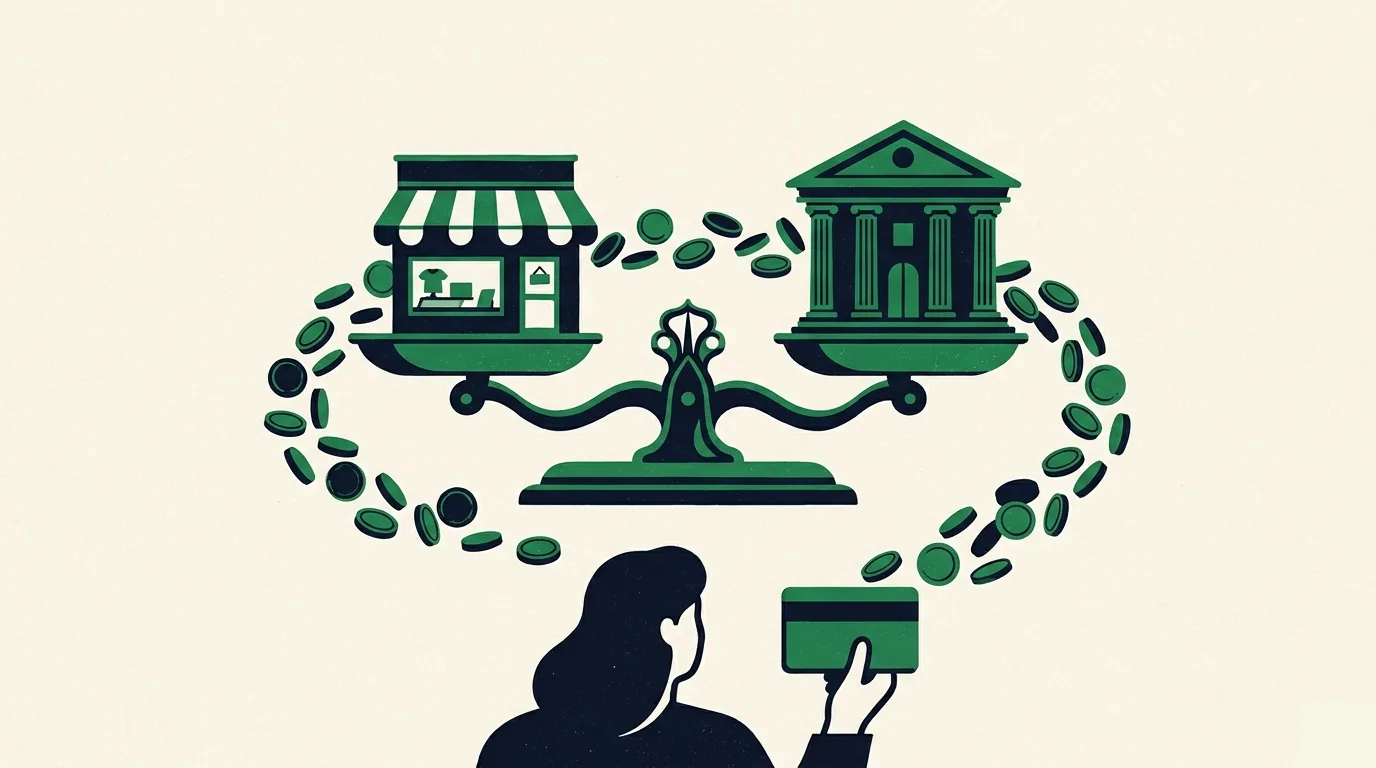
A refund is the merchant giving your money back. A chargeback is your card issuer taking it back from the merchant after you dispute the charge. A refund is usually faster and leaves the relationship intact, so ask for one first, in writing, with a deadline. A chargeback is the backstop when the merchant refuses, stalls or disappears. In the US, credit cards carry the strongest dispute rights, debit cards and bank transfers fewer, and PayPal runs its own system. In the UK, Section 75 is a separate legal claim against your credit card provider, and often the stronger one.
The rules depend on the facts and on where you live, so treat this as a practical guide, not legal advice.
Chargeback vs refund: the difference
| Refund | Chargeback | |
|---|---|---|
| Who decides | The merchant | Your card issuer, after hearing both sides |
| How you start it | Email, phone or chat with the company | A dispute with your bank or card issuer |
| Based on | Company policy, goodwill or your legal rights | Card rules and, for US credit cards, federal billing law |
| Speed | Often days, if the company agrees | Usually longer, with deadlines on both sides |
| Side effects | Usually none | The merchant can contest it, and may stop serving you |
Both get your money back. The difference is who you're asking and what happens if they say no.
Why ask the merchant first
The CFPB's advice on getting money back for a credit card purchase starts with the seller: reach out to the company that sold you the product or service and ask it to refund the money or undo the charge. Good reasons:
- It's often quicker. A billing team can reverse a charge in one step. A dispute involves your issuer, the merchant's response and a decision.
- Some rights require it. For quality problems on a US credit card purchase, one of the CFPB's conditions is that you tried in good faith to resolve it with the seller.
- It builds your evidence. A clear refund request with a deadline, followed by silence or a refusal, is what a dispute reviewer wants to see.
- It keeps your account. A refund rarely costs you anything else. A chargeback sometimes does.
Send the request to billing, not general support. Our billing email finder locates the address a company publishes, the refund email generator drafts the email from your receipt, and our guide to writing a refund request email covers the wording.
When to go straight to your bank
- The charge is fraud. The FTC says to report it to your card issuer or bank immediately and ask for your money back.
- Your deadline is close. The FTC warns against a slow process that could push you outside your legal protections. File now and keep talking to the merchant in parallel.
- The company has vanished. No site, no replies, no one to ask.
US credit cards: the Fair Credit Billing Act
The Fair Credit Billing Act sets the dispute process for credit cards and other revolving credit. The FTC's guide to disputing credit card charges lists the billing errors it covers, including unauthorized charges, wrong dates or amounts, and goods or services not delivered as agreed.
How to file
- Write to the issuer's billing inquiries address, not the payment address, with your name, address, account number and a description of the error.
- Meet the window. The letter must reach the issuer within 60 days after the first bill containing the error was sent to you.
- Prove delivery. The FTC suggests certified mail with a return receipt. Send copies, never originals, and keep a copy of your letter.
Many issuers let you start online or by phone, which is fine for speed. Follow up in writing anyway, as the FTC recommends.
What the issuer must do
The issuer must acknowledge your dispute in writing within 30 days, unless it has already resolved it, and resolve it within two billing cycles and no more than 90 days. Meanwhile you can withhold payment on the disputed amount and related finance charges, but you still owe the rest of the bill. If the issuer decides the charge was correct, the CFPB says it must explain why in writing and tell you what you owe and when.
Quality disputes are different
A product that arrived but was poor is generally not a billing error. You may still be able to refuse to pay the rest of the purchase if all of the CFPB's conditions are met: you tried in good faith with the seller, you bought it in your home state or within 100 miles of home, it cost more than $50, you paid with the credit card, and you haven't paid it off in full. That last one catches people out.
Debit cards and bank transfers
Debit cards feel the same at checkout and aren't the same in a dispute. The FTC says debit card protections are different from credit card protections, and you may not be able to get a refund for non-delivery or the wrong item, though some issuers offer protections voluntarily. Call your bank as soon as you see the problem, then follow up in writing.
Unauthorized transactions and errors on a bank account have firmer rules. The CFPB says to notify your bank within 60 days after it sends the statement showing the problem. The bank generally has 10 business days to investigate (20 for accounts under 30 days old), must generally give a provisional credit if it needs longer, and has 45 days to resolve it, or up to 90 for debit card point-of-sale purchases, foreign transactions and new accounts.
Speed also limits your losses on a lost or stolen debit card. Per the FTC's table on lost or stolen cards, you're liable for up to $50 if you report within 2 business days of learning about it, up to $500 if you report within 60 days of your statement, and possibly everything after that. On a credit card, the maximum is $50.
Bank transfers, including Zelle, and wire transfers have no chargeback in the card sense. The FTC's advice is to contact your bank or the transfer company immediately and ask it to reverse the payment. That's a request, not a right. If you have a choice at checkout, a credit card leaves you more options.
PayPal disputes
PayPal runs its own process: in the Resolution Center, choose Report a Problem and pick the payment. Per PayPal's dispute filing timeframes:
- Item not received: open the dispute within 180 days of paying.
- Significantly not as described: within 30 days of delivery and no later than 180 days after paying, whichever comes first.
A dispute starts as a conversation with the seller, and PayPal says it closes automatically after 20 days unless you escalate it to a claim. A closed dispute can't be reopened. Put day 20 in your calendar when you open it.
If a card funded the payment, choose your route. PayPal's Purchase Protection terms say you can dispute with PayPal or your card issuer, not both at once. Open a card dispute and PayPal closes its case, and you can't come back to PayPal later. If PayPal rules against you, you can still try your card issuer, deadlines permitting. PayPal also notes card chargeback rights may be broader than its own program.
What evidence to include
A reviewer reads your file quickly, so make the case obvious:
- The receipt or order confirmation.
- Proof of the problem: delivery dates and tracking, photos of damage, a cancellation confirmation, or a statement showing a duplicate charge.
- The promise you're holding them to: the product page, refund policy or terms, screenshotted with the date.
- Your refund request and their reply, or the lack of one.
- A five-line timeline: ordered, paid, problem, asked for a refund, response.
For undelivered orders, the FTC suggests including documents that show expected and actual delivery dates, plus any delay notice the seller sent.
What can go wrong
- The merchant contests it. Citizens Advice notes the trader can challenge your refund even after you've had the money back. In the US, a bank must give you written notice before removing a provisional credit. Evidence is what holds up.
- The merchant closes your account. A chargeback doesn't stop a company deciding it no longer wants you as a customer. For an email provider, cloud storage or app store account, losing access could cost more than the charge. Read the terms and try for a refund first.
- You miss a window. 60 days on a US credit card statement, 20 days to escalate on PayPal. Note the deadline on day one.
- The contract survives. Winning a dispute doesn't cancel a subscription. Cancel separately, in writing, with our cancellation email template, and see the guide to being charged after cancelling a subscription.
- It isn't a billing problem. Disputing something you ordered, received and used, because you changed your mind, isn't what the process is for.
If the merchant has already refused, read what to do when a company refuses a refund. When a case does go to a dispute, DemandRefund Pro builds an escalation pack from it: a card dispute summary, complaint text and an evidence list.
UK: Section 75 and chargeback are different things
Section 75 of the Consumer Credit Act 1974 makes your credit provider jointly and severally liable with the trader for a breach of contract. It's a legal right, not a favour. Citizens Advice sets out the conditions: you paid by credit card or buy now, pay later, a single item cost more than £100 and no more than £30,000, and you bought directly from the trader. Paying through a marketplace or a wallet such as PayPal usually breaks that direct link. If any part of the item went on the credit card, you can claim the full cost, from one card provider only.
Chargeback is the card scheme's process, for debit cards, charge cards, and credit card payments that don't qualify for Section 75. You can ask for what you paid on that card, but nothing paid by other methods.
Citizens Advice's rule of thumb: for a credit card purchase over £100 made directly with the trader, Section 75 is generally stronger. For PayPal, you have 180 days from paying to open a dispute. If your card provider rejects a claim you think is valid, you can complain to the Financial Ombudsman Service.