
What to Do When a Company Refuses a Refund
By Mark Fulton · · 8 min read
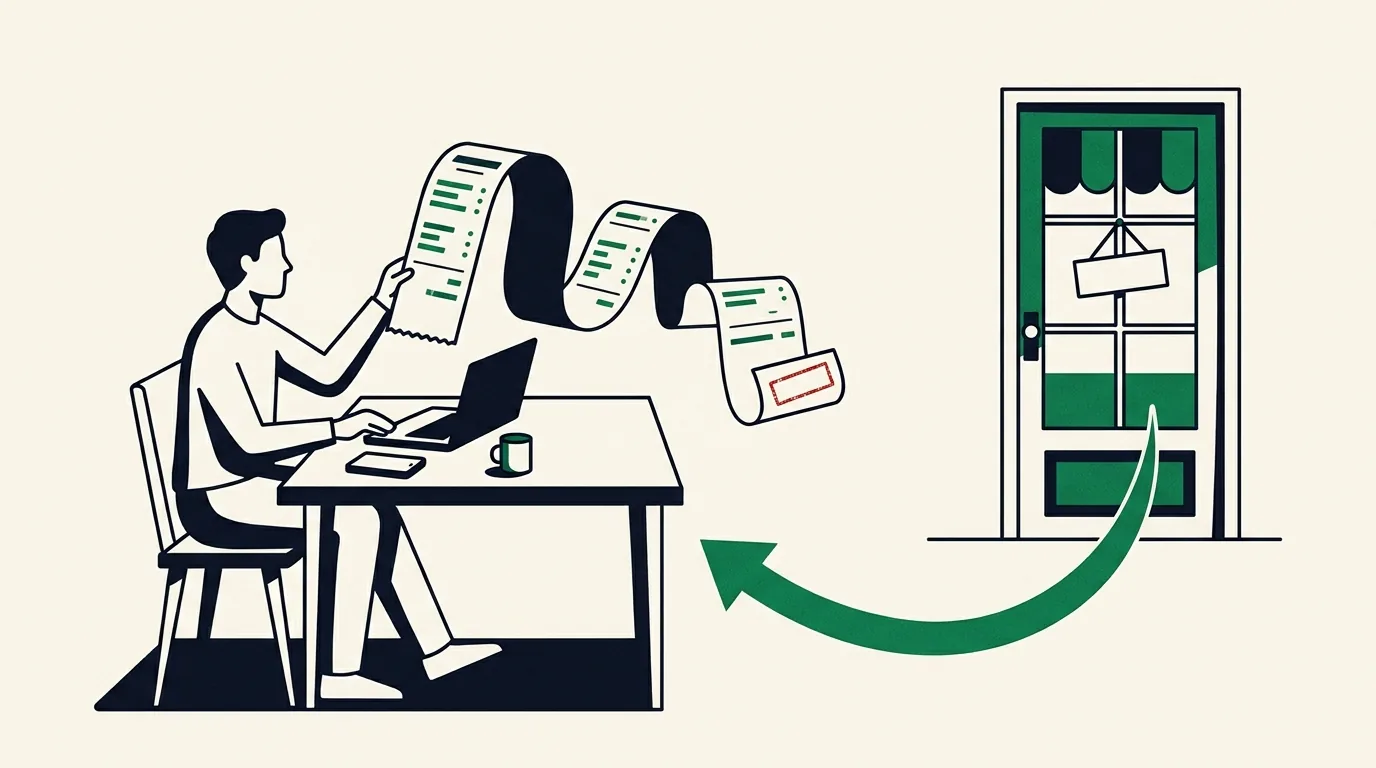
When a company refuses a refund, climb a ladder instead of arguing louder. Reread the policy and receipt, ask again in writing with an amount and a deadline, call and get a reference number, then escalate inside the company. If the answer is still no, dispute the charge through your card, bank or PayPal, each with its own clock. File complaints where they create pressure, and keep small claims court for last. Each step builds the paper trail the next one needs.
This guide is US-first, with a short section on the UK and EU at the end. Consumer rules depend on the facts and where you live, so treat this as a practical guide, not legal advice.
Step 1: Reread the policy and the receipt
Find out what you actually agreed to. A refusal is often an agent reading a policy at you, and the policy sometimes says more than they did. Pull up three things:
- The receipt or order confirmation. Note the order number, date, amount, payment method and the merchant name on your statement, which is who your bank will dispute against.
- The refund policy as it read when you bought. Check the order email, checkout page and terms page, and screenshot it.
- What was promised. Delivery dates, descriptions, trial terms, "cancel anytime" claims. Save the listing.
Then put your case in one sentence. "I was charged $89 on October 3 for an annual renewal I cancelled on September 28" is a case. "Your service is terrible" is not.
If the problem is delivery, know this rule: per the FTC's guide to being billed for things you never got, a seller that gives no shipping time must ship within 30 days, and if the item never ships you are entitled to a full refund, not just store credit.
Step 2: Ask again, in writing, with a deadline
A phone call is easy to forget. A written request is evidence. The FTC's own advice on solving problems with a business is to describe the product, explain the problem, say exactly what you want, attach copies (keep originals), and give a deadline for a response.
Keep yours short:
- Your name, the account email and the order or invoice number.
- What happened, as facts, with dates.
- The outcome you want: the amount, back to the original payment method, by a date. Seven to fourteen days is reasonable for most cases.
- What you'll do if it isn't resolved, said calmly: dispute the charge, or file a complaint with your state attorney general.
Send it to the right inbox. A billing address is often faster than general support, since that team can issue credits. Our billing email finder pulls the billing or support contact from the company's own pages, and our guide to writing a refund request email has sample wording for friendly, firm and final versions.
Step 3: Call with a script and get a reference number
Some agents have discretion that email queues don't. Call after your written request is in, so you can say "I emailed on the 12th and I'm following up." On the call:
- Give the order number first, then the one-sentence case.
- Ask a direct question: "Can you process a refund of $89 to my original card today?"
- If the answer is no, ask what policy they're applying and whether anyone can make an exception.
- Before you hang up, get the agent's name or ID, the date and time, and a case or reference number.
Write it down while it's fresh. The FTC recommends keeping notes on who you spoke with, the date, and what they promised. If talking on the spot is hard, a written refund phone script keeps you on track.
Step 4: Escalate inside the company
A front-line "no" is rarely the company's final answer. Ask for a supervisor, the billing team or the formal complaints process, and check the site for a complaints email or a customer relations address.
Make the escalation shorter than your first message: the case in two sentences, the dates and reference numbers of your earlier contacts, the outcome you want, and a final deadline. If you plan to dispute the charge, say so. That is information, not a threat.
Step 5: Dispute the charge with your payment method
If the company won't move, your payment method usually can. The rules depend on how you paid.
Credit cards: the Fair Credit Billing Act
Credit cards carry the strongest federal protection. According to the FTC's guide to disputing credit card charges, billing errors include charges for goods you didn't accept or that weren't delivered as agreed, wrong amounts, and unauthorized charges. The process:
- Write to the card issuer's billing inquiries address, not the payment address. Include your name, address, account number and a description of the error.
- Your letter must reach the issuer within 60 days after the first statement showing the error was sent to you.
- The issuer must acknowledge your dispute in writing within 30 days and resolve it within two billing cycles, and no more than 90 days.
- While it investigates, you can withhold payment on the disputed amount, but you must pay the rest of the bill.
The FTC publishes a sample dispute letter and suggests certified mail with a return receipt. Most issuers also take disputes online or by phone, but the federal deadlines are built around written notice, so send the letter too.
There is a second, separate right for quality problems. The CFPB explains that you may be able to refuse to pay the unpaid balance on a purchase that went wrong if you tried in good faith to resolve it with the seller, the price was more than $50, and you bought in your home state or within 100 miles of your home address. If you don't meet them, ask your issuer anyway.
Debit cards and unauthorized transfers
Debit cards are weaker for merchant disputes. The FTC warns that you may not get your money back for non-delivery or a wrong item, though some banks voluntarily offer more. Call your bank as soon as you know there's a problem, then follow up in writing.
Unauthorized transactions are different, because federal rules cover them. The CFPB's guide to money missing from your bank account sets out the timeline:
- Report a lost or stolen debit card within two business days to limit your liability to $50. After that, it can rise to $500.
- For unauthorized withdrawals while you still have the card, the latest deadline is 60 days after the statement showing them was sent.
- The bank generally has 10 business days to investigate (20 for accounts open less than 30 days). If it needs longer, it generally must give you provisional credit while it finishes, and the final resolution can take 45 days, or up to 90 for debit card point-of-sale purchases.
A renewal you forgot to cancel is usually not "unauthorized" in the legal sense, because you agreed to the subscription. Treat that as a merchant dispute, not fraud.
PayPal disputes
If you paid with PayPal, its Purchase Protection terms set the clock:
- Item not received: open a dispute within 180 days of the date you paid.
- Significantly not as described: open it within 30 days of delivery or within 180 days of payment, whichever comes first.
- If you and the seller can't agree, escalate the dispute to a claim within 20 days of opening it, or PayPal closes it automatically.
One trap: you must choose between a PayPal dispute and a card issuer dispute. If you go to your card issuer, PayPal closes its own case. PayPal also notes card chargeback rights may be broader than its program, so pick deliberately.
Step 6: File complaints that reach the company
Complaints work as pressure and as a record. Attach your timeline and reference numbers to each one.
- The CFPB, for banks, credit cards, prepaid cards, money transfer apps and similar products. If your bank or card issuer mishandles your dispute, submit a complaint to the CFPB. It forwards complaints to the company, and says companies generally respond in 15 days.
- Your state attorney general or state consumer protection office. The FTC notes these offices can mediate complaints and act against businesses that break the law. The National Association of Attorneys General links to every state's complaint page.
- The FTC, at ReportFraud.ftc.gov. The FTC says it doesn't resolve individual complaints, but reports help it spot patterns.
- The Better Business Bureau. The FTC notes that local BBB offices try to resolve customer complaints, and a public complaint at the BBB sits on the company's profile where other buyers can see it.
Step 7: Small claims court as the last resort
When every other door has closed, small claims court is built for this. The FTC describes it as relatively low cost with simple procedures, usually without a lawyer. Limits vary by state, and some go as high as $25,000. Check your contract first, since some terms require arbitration instead. Your paper trail from steps 1 to 6 is your case file.
If you're in the UK or EU
The tools are different, and in some ways stronger.
- Section 75 (UK). If you paid at least partly by credit card for a single item costing more than £100 and no more than £30,000, your card provider is equally liable with the seller. Citizens Advice explains Section 75 and chargeback, and notes it usually doesn't apply when you paid through a third party such as PayPal or a marketplace.
- Chargeback. For debit cards, and for credit card purchases that fall outside Section 75, ask your card provider for a chargeback. If it fails, Citizens Advice suggests asking whether your provider used the appeals process, and if it didn't, you can complain to the Financial Ombudsman Service.
- The 14-day right to cancel. In the UK, most online and phone purchases come with a 14-day cooling-off period starting the day after you receive the goods. The seller must refund you within 14 days of getting the item back or proof that you posted it. In the EU, the right of withdrawal gives you 14 days from delivery for goods and 14 days from the contract for services, with exceptions such as personalized goods and dated travel or event bookings.
The short version
Start at the top, keep everything, and watch the dispute clocks: 60 days for credit card billing errors, 180 days for most PayPal disputes, and as soon as possible for anything unauthorized.
If the problem is a subscription you still need to stop, send a cancellation email first so no new charges land while you argue about the old one. And if you want to see how a specific company handles refunds, browse our refund guides by company.